| Region | |
|---|---|
| Subregion | France > Rhône > Northern Rhône > Hermitage |
| Colour | Red |
| Type | Still |
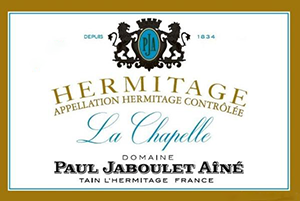

Tasted at Château La Lagune, owner Caroline Frey's Bordeaux outpost. One of the legendary wines from Hermitage Hil, La Chapelle comes from pretty much the only spot on the Rhone's Left Bank where you find granite, along with the classic galet stones. The Jaboulet style is to blend their plots from across the hill, resulting in the stunning power of this wine. The complexity here is of the kind that reveals a truly great wine. There are so many things happening, graphite, slate, fleshy layers of blackberry fruits that collide immediately afterwards by a tightly controlled edge of tannins, then the whole thing finishes slowly, cleanly. Incredible. (Drink between 2020-2042)
From a cooler, more challenging vintage for the Rhône, yet one that was certainly better in the north than the south, the 2013 Hermitage La Chapelle reveals a vivid purple hue as well as beautiful, cooler climate black raspberries, mulberries, white pepper, crushed stone, and spicy, sandalwood-like aromas and flavors. Medium to full-bodied on the palate, it exudes class and elegance, with silky tannins, perfect balance, and a great finish. I can't say it's a classic La Chapelle, as the usual smoky, meaty, soy-like nuances are missing, but this is just a complete, gorgeous Hermitage that will evolve gracefully over the coming 20-25 years. (Drink between 2022-2047)
A much more structured, even austere, Hermitage than the La Petite Chapelle release, the 2013 Hermitage la Chapelle came from minuscule yields of ten to 18 hectoliters per hectare and was aged 15-18 months in 20% new French oak. Not harvested until the 12th of October, it offers a sensational bouquet of blackberry and black raspberry fruits, powdered rock, gunpowder and pepper. Medium to full-bodied, with good (though maybe not great) levels of concentration, it has high, yet beautifully polished tannin, integrated acidity, and terrific cut and focus on the finish. Give bottles 4-5 years of cellaring and enjoy over the following two decades.