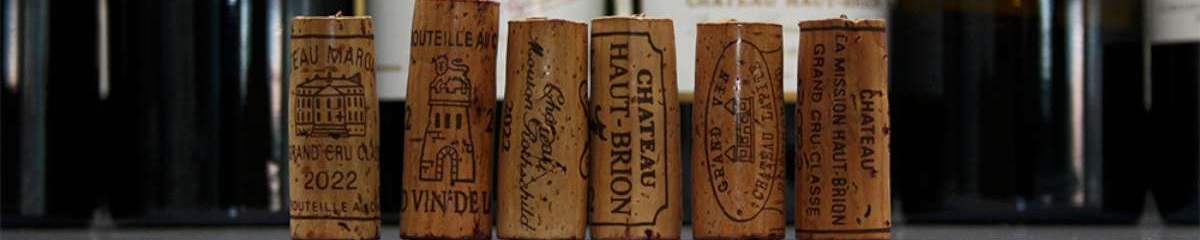
2022 is a vintage with a big reputation. Lauded by many producers as another “vintage of the century”, with critics handing out perfect scores for several wines as vignerons believed they may have made their best wines ever, the combination of extreme weather and difficult market conditions, together with at times higher-than-ever release prices meant wines with great potential were often bought in more modest quantities.
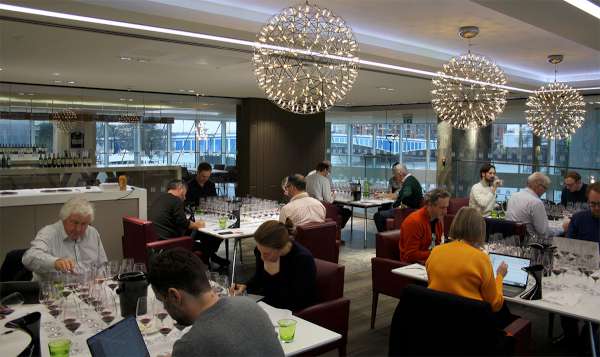
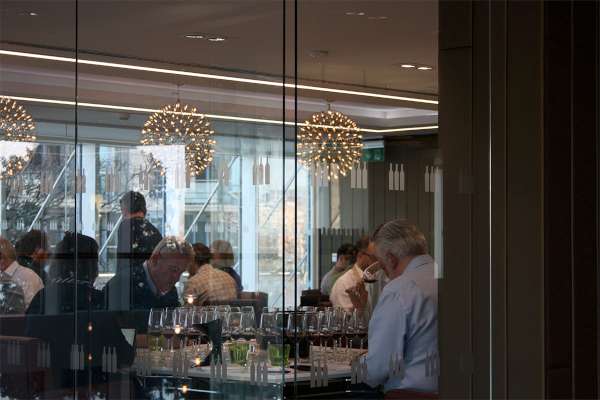
Now in bottle, the Southwold Group met to taste the top 250 or so wines from the vintage to see if there is value to be had, and whether this vintage belongs among the very best of the modern era. The 20 tasters included writers Neal Martin and Jancis Robinson MW, assembled buyers from the UK trade, and included 11 Masters of Wine. As usual, the tasting is entirely blind, in peer group flights. The below focuses specifically on the wines from the tasting - those looking for a more detailed primer on the vintage should look to our en primeur report and blog from our first take on the vintage with some vertical context.
The tasting began on the right bank. The weather conditions for the vintage arguably made great wine a more difficult prospect with Merlot, the heat and drought a difficult combination that in the early 2000s would have given cause for concern. However, though some lesser wines struggled for balance with the heat and sunshine making some wines a little less harmonious than ideal, the over-riding thoughts were of the progress Bordeaux has made in the last two decades. Had this vintage come before 2003, or even in 2009, the wines would have struggled to give the level of appetising freshness on display here. This is really a feat of the vines and those who manage them rising above what was, in truth, a difficult summer in its extremes of heat and drought. It is well noted how Saint Emilion has improved in recent years but in 2022 it may even have been more consistent than Pomerol for the top names – perhaps due to a great ability to adapt blends and sites.
The value picks on this side of the river were clearly the Durantou wines: Montlandrie, Petite Eglise and Les Cruzelles all showed class, balance and above all sheer drinkability. Montlandrie has become a key wine for the Durantous in recent years, each vintage seeming to improve on the last. The 2022 does this again, it is a deep, iron-tinged wine of structure yet finesse and is outstanding value for money. Some 2022s are a little stubborn, but the fragrance and approachability in many is to be admired. In Saint Emilion, Cheval Blanc and Figeac were dominant if quite different. Cheval is all fragrance and succulence, with gently folded tannins enveloped by succulent, chocolatey fruit. Figeac by contrast is a strong, muscular and vertical wine that feels as much about Cabernet as it does the appellation - it should get even better with a decade in bottle. These two are of course wines that should deliver, and they do. I personally loved Canon and Troplong Mondot, two wines that offer similar quality at a more modest price point. In Pomerol there was a clear winner, where the group found Eglise Clinet to be one of the wine of the vintage, masking the heat with an almost left-bank style depth and prowess – many might struggle to pick it as a right bank wine in a blind line-up of 2022s, but it is a truly great Pomerol. I had this as my top-scoring right bank wine, and it is one to lay down for at least a decade.
Pessac-Léognan was surprisingly varied: some wines were too hot, others were picked too early, but some had that goldilocks blend with real precision and a sweetness of fruit that is a hallmark of this year. Haut Brion and its stablemate La Mission were both excellent, taking first and second place in order. I have found hot vintages of these two wines difficult to judge in youth; 2022 is one of the first where I have felt the real character of these two wines rise above any heat or ripeness in the last 10-15 years - most impressive. Equally so was Domaine de Chevalier (with its special label), which came third and bested many more expensive wines in the process. The honest purity and smoky depth will deliver drinking pleasure for years to come. Les Carmes Haut Brion was another success, and my joint-top score for the appellation outside of Haut Brion itself. This idiosyncratic wine continues to impress with its personality and balance. And an honourable mention must go to Malartic Lagravière, which has seen a reining in of sweeter elements to produce an excellent, moreish wine in 2022.
It is in Margaux that we (and I) found the wine of the vintage. Château Margaux with its low yields (25hl/ha) and high level of Cabernet Sauvignon (92%) felt deep, concentrated and harmonious, with an ethereal, floral lift that only a few managed this vintage. It will stand alongside their best wines of the modern era. Second place went to Brane Cantenac, a big overperformer that with its sweet wood and serious fruit; it should offer serious drinking pleasure to a wide range of collectors. I would give it five years or so just to knit together, but the underlying presence and focus of the fruit and tannin promise great things to come. Palmer and Rauzan Ségla were, unsurprisingly, also very impressive and contrasting in style – followers of these two wines will unquestionably enjoy them.
Saint Julien is normally the point in a vintage where we see remarkable consistency and quality, and though the top performers did shine we did feel that this flight was a little disappointing. Perhaps some of these wines are closed, perhaps the wood regimes were not adapted to the vintage and showed too much spice and wood tannin, but there was more separation between the best and the rest than usual. Ducru Beaucaillou just edged in front, luxuriant but serious in fruit, not quite as sweet as it has been in recent vintages with real backbone. Léoville Las Cases showed very well – this is serious Cabernet but not as strict as it has been in the past; I expect it will perform even better at ten years on. Joint third were Léoville Barton – my wine of the flight with its inky blackcurrant fruit, strong backbone and use of wood that was much more measured and finely integrated than the rest in my view – and Lagrange, a real overperformer this year as it has been in many of the great vintages. People seeking value, quality and a sense of place should strongly consider this excellent wine. It has all the elements you want from a serious Saint Julien, but unlike the other three wines here I expect it will start drinking well in three or so years time. One I noted down for my own cellar.
Pauillac was unsurprisingly studded with quality, though I felt, perhaps in contrast to usual, there was depth in the region this year, perhaps more so than in St Julien. Latour, as is so often the case, came out top. The power and depth of this wine is evident, it will make great old bones and it is perhaps best we won’t see it on the market for some time, so that bottles don’t get opened too soon. Mouton Rothschild nipped at its heels, much more exuberant with lashings of wood, it too will need time for that to integrate. Lafite was also excellent, more subtle and delicate. From the non-first growths there was a clear winner – Lynch Bages. I remember this wine being a monolith in barrel, difficult to get into, but now it is showing fruit equal to its structure. This is a vin de garde, it will need another decade before opening at least, but the length, power and balance – nothing is over-ripe or overdone despite the sheer weight of each element – mean this will be a great wine from this estate, perhaps equal to the 2009 or 2019. Honourable mentions to the two Pichons and Grand Puy Lacoste; all three were excellent and tasted of themselves as much as of the vintage, which is no mean feat.
Saint Estèphe is usually much easier to taste in warm vintages and so it proved here, the natural austerity in structure lifted by a greater weight of fruit. In fact, some of the less successful wines perhaps went too far in this direction and lost their sense of balance, while others were too cautious and left their wines a little lacking in stuffing. One wine clearly rose above, and it will be no surprise to hear it was Montrose. This is yet again of first growth quality, and in my view might be better than some. Deep, stony, refreshing despite such a weight of fruit, this is a contender for wine of the vintage regardless of its classification. Those seeking value should jump on Tronquoy 2022. Under the same ownership as Montrose, I cannot think of a better quality-price wine in this vintage. It came second in this flight, beating many wines that are multiples of the price. One to put in the cellar and drink from two years’ time over the coming 10-15+ years. An outstanding achievement.
Hot vintages and white wines (dry or sweet) do not often marry, and so it proved this year. There are many recent vintages that I would buy ahead of this, but there were successes worth discussing. Firstly, Domaine de Chevalier continues to make, to my mind, the most consistent and excellent dry white in Bordeaux. It was the top performer again this year, more subtle, textural and somehow fresher than its counterparts, from cooler sights with careful elevage, it is clear that it stands apart – and now under DIAM it will age reliably year on year. I have found the white wines from Haut Brion and La Mission almost over-the-top in hot years, but the 2022s showed very well with much more grip and structure to tame the fruit than I have found before. Those without a budget will certainly enjoy these wines.
In Sauternes, the dry wines have been difficult to taste and we still found that there are too many different styles to bring these wines under one umbrella of what they taste like. Some lean into the unique nature of the region, using some botrytis to add texture and depth, while others are shifting to a more traditional, zippy and crunchy white. The former are undoubtedly my favourite as they have a sense of place. To that end, C de Sec du Château Closiot – Jean-Marie Guffens’ estate – came top, a big, textural wine with some hints of botrytis and a clearly Burgundian hand in elevage with some salty oak and spicy depth. Y d’Yquem was just behind, and I found this an excellent example of how dry Sauternes should taste – no surprise given they have been making this wine for over 60 years.
The sweet wines also fell into two categories, to the point that it seems there is some crisis of identity for Sauternes – but perhaps we can put this down to a difficult vintage where botrytis came late and fast; you had to take risks and be able to mobilise a large team quickly to get it right. The lighter wines were good but not great, and two wines separated themselves once more. Yquem came second, a very well balanced, silky and quite open-knit style – perhaps not one that will be considered in the pantheon of its greatest wines but one which has identity. Suduiraut, that some will recall had perilously low yields, came top. This is a deep, rich and complex wine that feels almost from another vintage. Risks were clearly taken that sacrificed yield, but the resulting wine was clearly worth it.
After three days of tasting it can take some time to reflect on just where these wines sit qualitatively and stylistically, and that was the case with the 2022s. Is it a great vintage, or a vintage that shows just how far Bordeaux has come in terms of managing heat and drought? Does it have the depth of quality to rank among the best vintages of this century, or is it a vintage that allowed the top estates to separate themselves?
After looking back at my notes, I think 2022 sits in the top tier of the last decade with 2016, 2019 and 2020, though it lacks the consistency from top to bottom of the 2019s, or the savoury, chiselled harmony and sense of place of 2016, which is currently my favourite vintage. It is not in question that 2022 has many great wines, and some châteaux have produced examples that will sit among their greatest ever. It should not be underestimated that had this vintage come ten or more years ago, we would have seen wildly different offerings from many properties – the shift in intention is unquestionably a good thing. Though ripe, there is a sense of freshness and lift in aromas and flavours that we did not expect. Yes, alcohols can be high, especially with more Merlot, but for the best examples this is carried without issue. There still needs to be a refinement in the use of oak from some properties who did not or could not adjust their recipe, the bigger wines pulling more spice and oak tannin into them in a way that can mask the fruit – though my hope is that this will integrate in time. Some wines were also too cautious with harvest dates or ripenes and were a little thin or astringent as a result, but most were well-managed.
What is certain is that there are great wines at all price points, and there are many good options to fit all tastes. Most will need time in bottle before approaching - this is not like 2019. I expect some wines to be ready before their 2020 counterparts as the tannins feel more resolved, riper and integrated despite being two years younger. Some tasters commented that this is a difficult time to taste this vintage, and though I agree some wines felt closed and may score even higher in time, this was not as hard a vintage to taste as 2020 at the same age. Now four years old, and with prices that have fallen since en primeur, there are wines that look like a good deal. There are wines that will appeal to Bordeaux loyalists and newcomers to the region alike, which will start to drink in two or three years’ time and reward cellaring in some cases for three or four decades. Below you can see an updated ranking of the last ten years in tiers, the best wines in each appellation, and a shortlist of wines that offer value for money. Up next is the 2016 Ten Years On – a very interesting comparison to this modern great.
Top Wines by Appellation
Saint Emilion – Cheval Blanc
Pomerol – Eglise Clinet
Pessac-Léognan – Haut Brion
Margaux – Margaux
Saint Julien – Ducru Beaucaillou
Pauillac – Latour
Saint Estèphe – Montrose
Sauternes/Barsac – Suduiraut
Dry White – Domaine de Chevalier Blanc
Worthy mentions and value picks:
Montlandrie, Petite Eglise, Cruzelles, Domaine de Chevalier, Brane Cantenac, Lagrange, Lynch Bages & Tronquoy
Vintage ranking, decade to 2022 :
Fighting for first: 2016 & 2019
Top tier but just behind: 2020 & 2022
Second tier: 2018, 2015, 2014 (northern Médoc)
Third tier: 2014 (elsewhere), 2017, 2021
Bringing up the rear: 2013